
May 19, 2026
What is Knob and Tube Wiring?
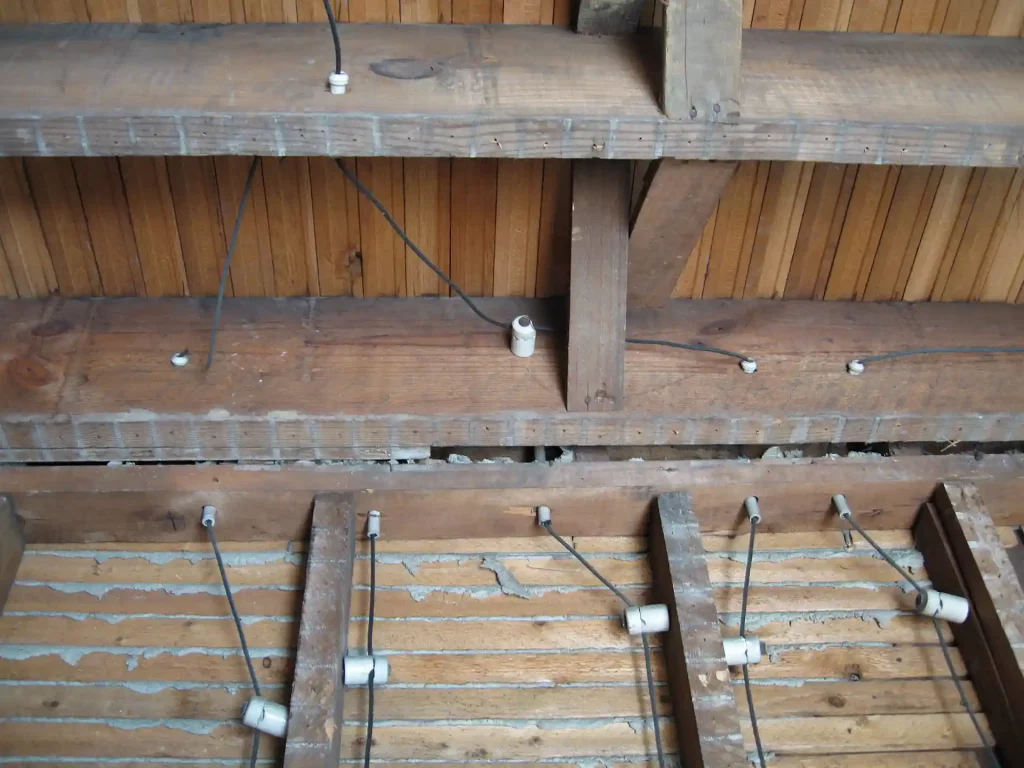
“Knob and tube wiring” (also known as K&T wiring) is a wiring method that was heavily used in residential buildings from 1880 to 1930. The method used single copper wires and ran them through walls and ceilings, using a protective porcelain insulation tube to pass through joist and stud holes while being secured in long runs with porcelain insulators. Eventually, knob and tube wiring became obsolete as its pricing became too high when compared to all-encompassing cables. In this blog we are going to look at the dangers of keeping knob and tube wiring in a home, and what can be done to eliminate such lingering hazardous practices.
Is knob and tube wiring dangerous?
Knob and tube wiring can result in a number of hazards and dangers, especially as time has passed.
- Due to how long ago knob and tube wiring was considered an industry standard, insulation on the wiring has typically become brittle, broken, cracked, or gone missing entirely.
- New installations in housing may have been done through mixing old and new wire, aka a very hazardous method that could result in a fire.
- Knob and tube wiring lacks a ground, resulting in groundless and/or misleading electrical outlets.
- K&T wiring is often modified by do-it-yourself projects, or unqualified technicians. This can result in poor connections.
- K&T is designed to dissipate heat by being in free air. This poses a problem as K&T is often overlooked, resulting in it being covered in insulation over the years, which further raises the risk of fire for homes that still run it.
How can I identify knob and tube wiring in my home?
While it may help, you don’t have to be an electrician to identify knob and tube wiring. Let’s look at the methods you can use to identify knob and tube wiring in your home.
Key elements of K&T include:
- Non grounded outlets: If an outlet in your home consists only of two insert prongs, then that means it is lacking grounding, and most likely using knob and tube wiring.
- The wire itself: If you have an unfinished basement, or are able to access your attic or crawlspace, take a moment to see if there are any visible single black strand wires running through with porcelain insulators in the area.
- Home history: If you live in a house built between 1880 and 1930, find out if it has any history of renovations. While a history of renovations doesn’t guarantee the removal of K&T, a lack of renovations heavily guarantees there is still K&T wiring.
- Insurance: Insurance companies charge an extra premium for houses with knob and tube wiring.
Together, these methods can be used to identify knob and tube wiring being used in your home.
How do I fix knob and tube wiring?
“Fixing” of knob and tube wiring requires a complete removal of the outdated practice, which can be a lengthy and expensive process. Luckily, our family at Birnie HomeSAFE includes highly trained electrical specialists who are dedicated to rewiring your home, while trying to minimize as much damage as possible. In the event of necessary damage caused during rewiring and removal of K&T, we partner with patching and painting companies to make sure that your home returns how it looked before, as if no work was done at all.

Book a HomeSAFE Electrical Risk Assessment
Still unsure of K&T in your home, or looking for a quote? Contact Brinie HomeSAFE for our HomeSAFE Electrical Risk Assessment. The risks of keeping knob and tube wiring in your home are no joke, get a quote today and ensure the safety of you and your loved ones.
The ERA system prevents fires by giving licensed electricians the training, tools, technology, and support needed to complete a thorough Electrical Risk Assessment.
👉 Learn more about a HomeSAFE Electrical Risk Assessment at Birnie HomeSAFE:
“Knob and tube 1930” by Laura Scudder is licensed under CC BY-SA 3.0.
